Most providers of PI System and AF services come from a technology background. We come from yours. We've been process engineers, operations managers, automation leaders, and reliability champions inside the plants we now serve — then spent the next 30 years turning that experience into PI Asset Framework templates that operations teams actually use.
Plenty of firms sell PI System and AF services. Few have actually run the units you run, made the calls you make, or carried the safety and reliability accountability you carry. We have.
16 years at Amoco / BP as a process engineer and operations manager, then Chief Automation Officer for Manufacturing. Two more decades at OSIsoft / AVEVA as a global executive advisor — helping operating companies align business strategy, operational excellence, and digital strategy through layered-analytics frameworks built on PI System and PI AF, covering people, process, technology, and continuous improvement. BS Chemical Engineering, Texas A&M. MBA, Rice.
Process design and process engineering background; MS Chemical Engineering from UC Berkeley. Part of the team that created the Sigmafine Framework — the precursor to PI AF — and 30+ years building, deploying, and mentoring on PI AF across hundreds of plants worldwide.
Between us, we've delivered “Art of the Possible” workshops, hands-on training, and AF template engagements in every sub-industry on this page. The templates and value statements below aren't theoretical — they're built on what we've actually done in your control rooms, your reliability reviews, your turnaround meetings, and your operations excellence programs.
No two plants run the same way. The templates above represent the use cases we've delivered most often — but the real value comes when we sit down with your subject matter experts and co-develop the templates that fit your process, your assets, and your operating model. That's how AF wins. We start with what we've built, then extend it together — not the other way around.
Talk to us about your use caseEvery engagement on this page started with a 30-minute conversation. If any of these use cases sound familiar — or if yours isn't here yet — let's compare notes.
Schedule a 30-minute call See Dr. AF™ check-up packageFrom wellhead to terminal, PI AF underpins production performance, asset reliability, safety, and the AI-ready data backbone the industry runs on. We bring AF templates and mentoring grounded in real upstream-to-downstream operations.
From every well, pad, and field, AF turns operational data into actionable surveillance, allocation, and decision support — so production teams catch underperformers early and keep barrels flowing.
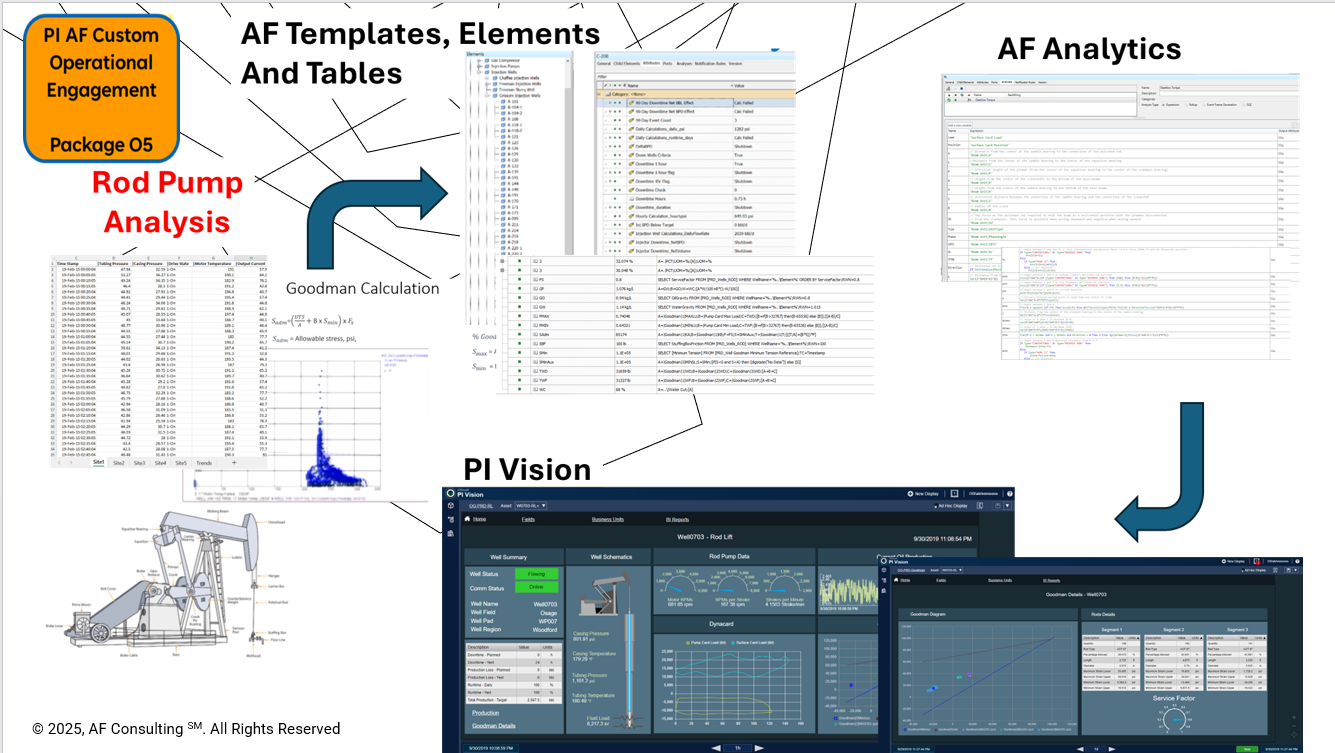
Sucker-rod string surveillance with embedded Goodman fatigue calculations. AF templates encode well-by-well rod-lift health; AF Analytics surface anomalies; PI Vision delivers pump card, surface card, and Goodman diagrams to operators.
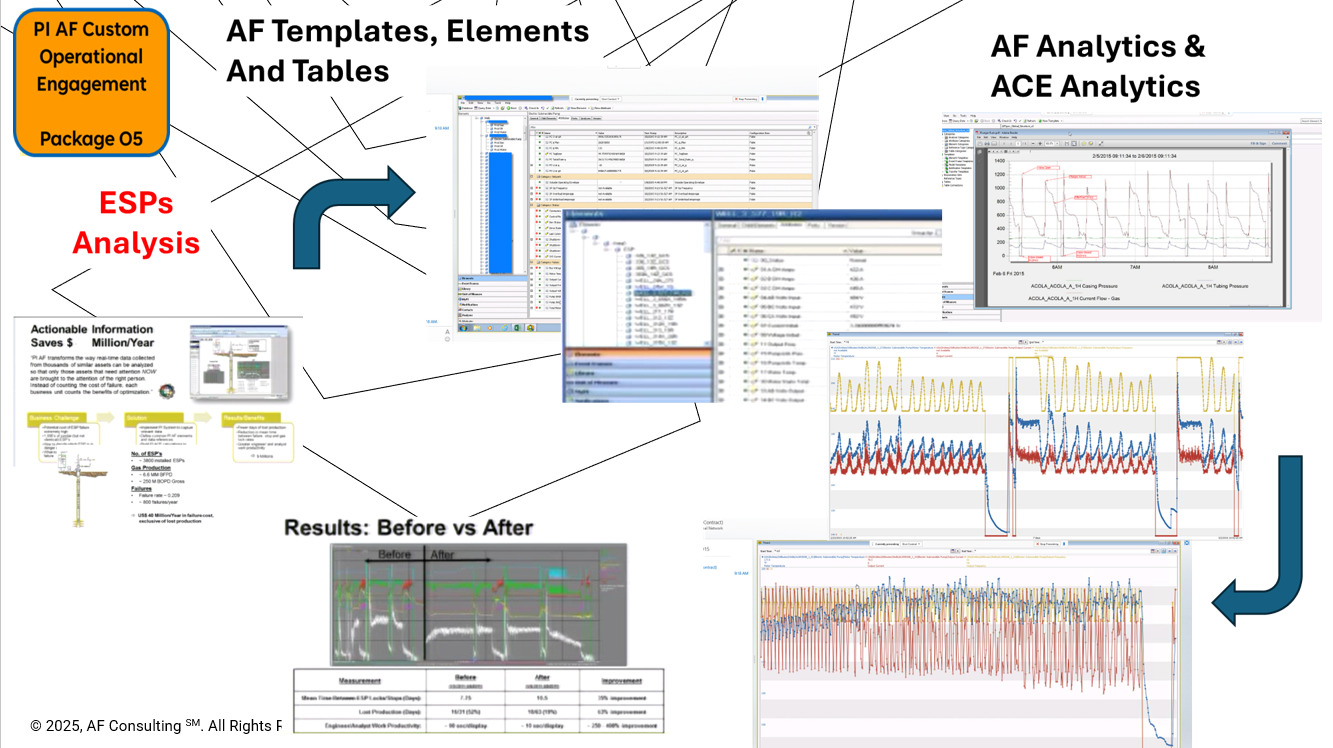
AF templates + AF & ACE Analytics for ESP surveillance — current, voltage, motor temperature, and pump-curve health across fleets of thousands of wells. Before-vs-after results show clear, attributable improvement.
Pipelines, compressors, gas plants, LNG terminals, and storage are throughput businesses. AF brings flow accounting, integrity surveillance, and asset health into a single, trusted operational picture.
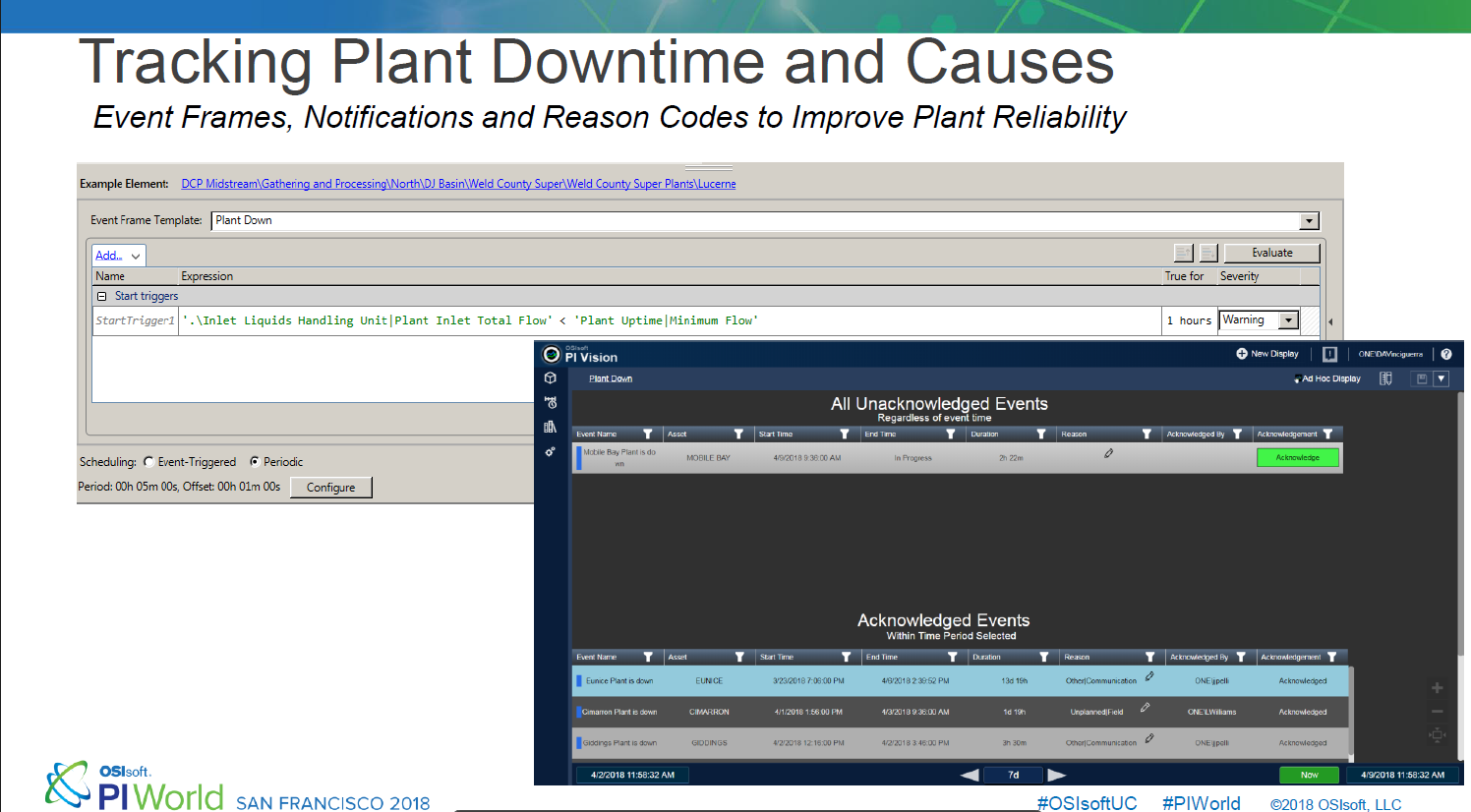
AF templates and Event Frames capture every plant downtime event — cause, duration, deferred throughput, and recovery. PI Vision surfaces root cause patterns; reliability and operations teams use it to drive availability up and unplanned outages down.
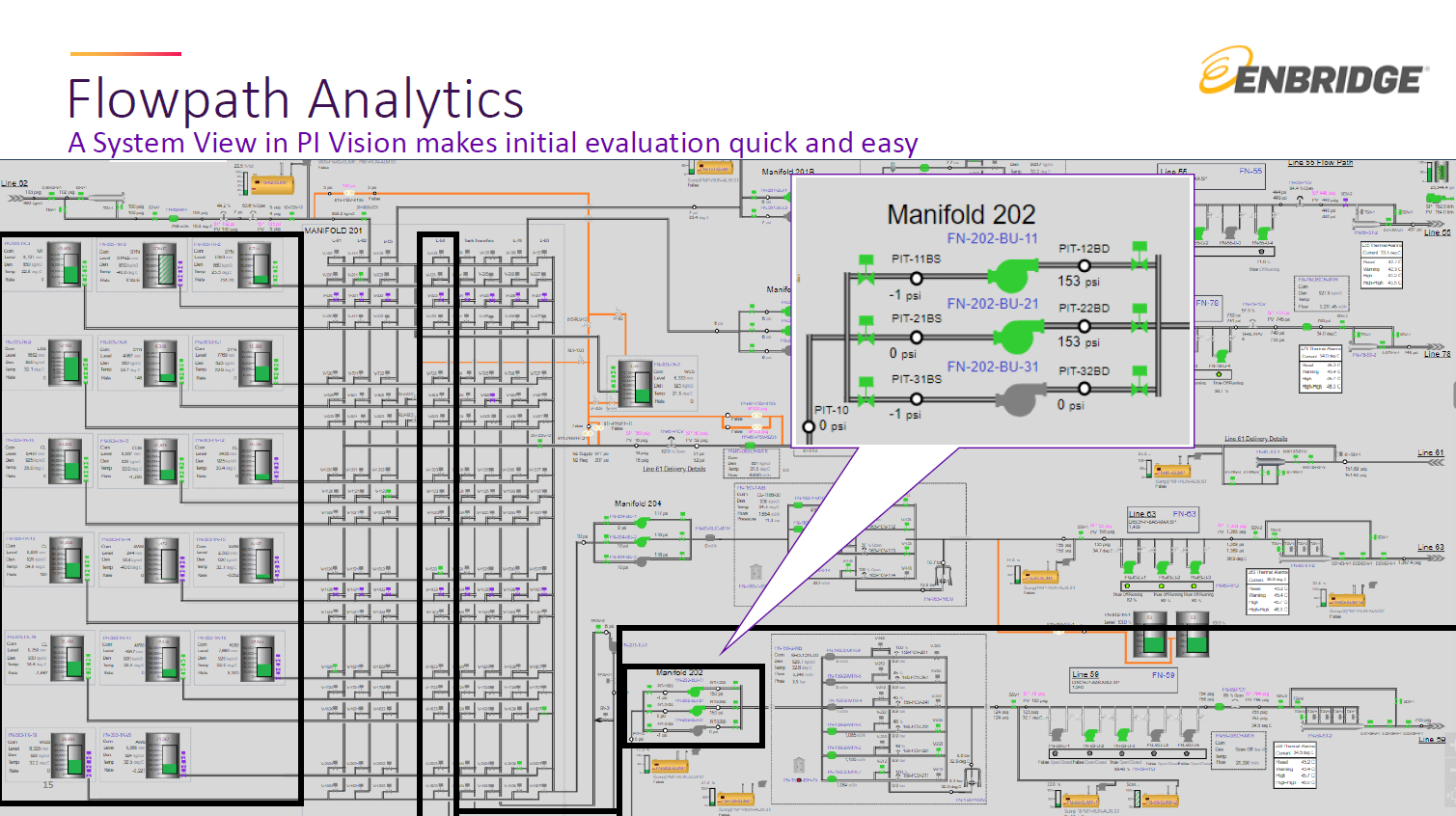
AF templates dynamically determine and render in PI Vision the active flow path through the midstream network — pipeline, compression, processing, storage. Surfaces lineage, bottlenecks, and routing decisions in real time.
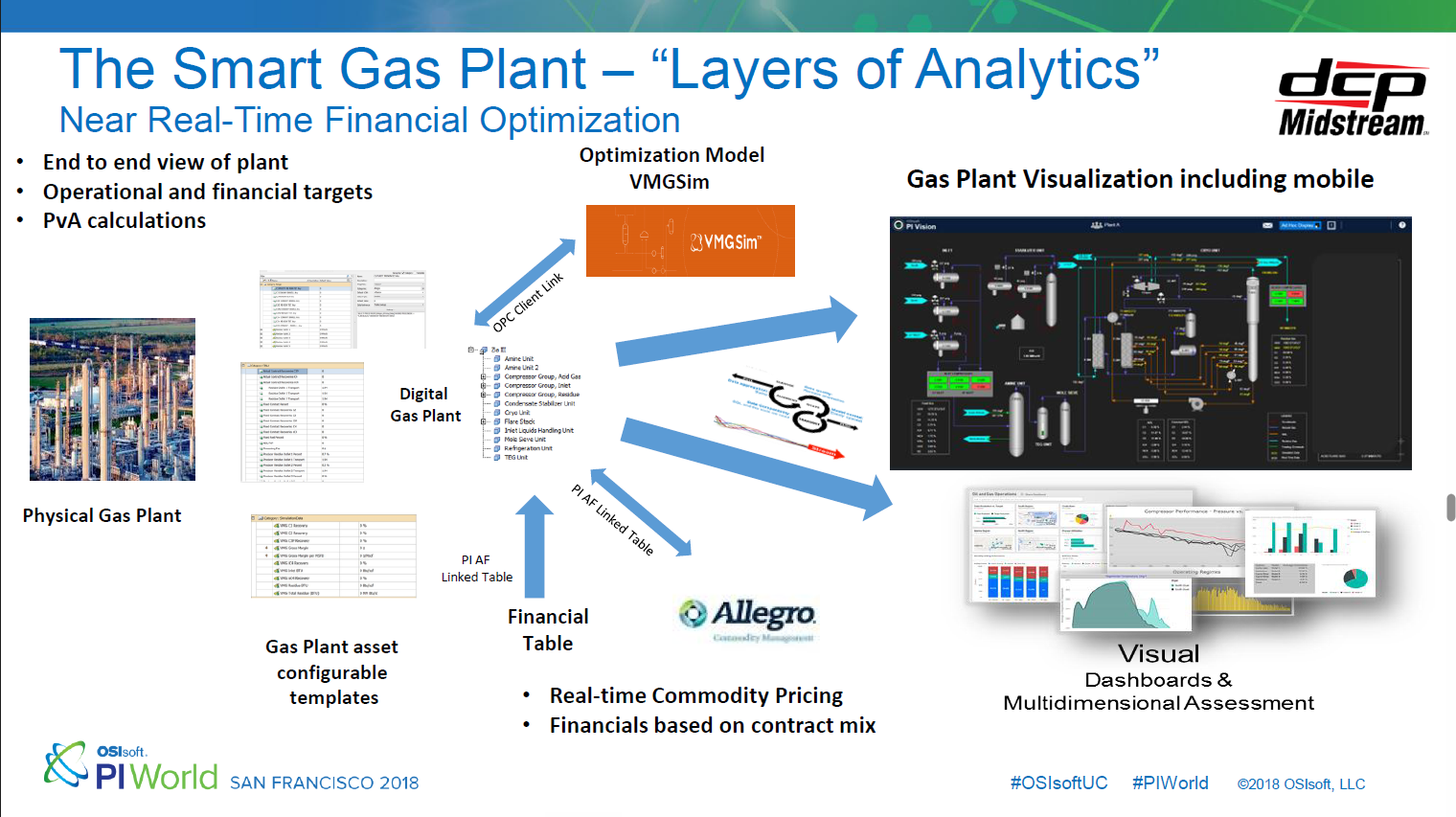
AF analytics that determine, in near real time, the production targets and profitability of a gas processing plant — integrating commodity pricing, simulation, and real-time process data into one operating model for shift-by-shift economic optimization.
Refineries are the original PI AF use case. We bring battle-tested templates that connect crude unit performance, energy systems, catalyst life, and reliability into one operational model.
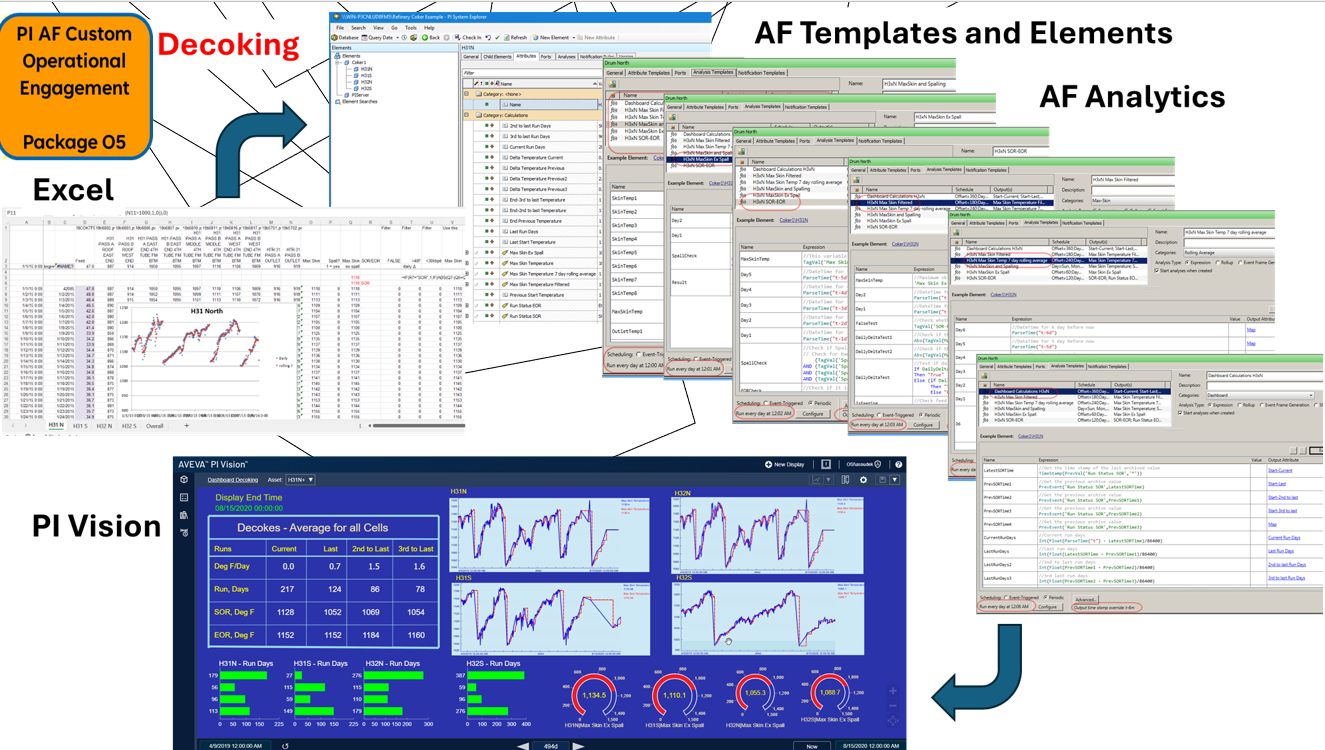
Coker drum decoking surveillance — skin temperatures, max skin, spalling detection, run-day tracking, and SOR/EOR analytics. PI Vision dashboards show decokes per cell, average run days, and per-drum performance.
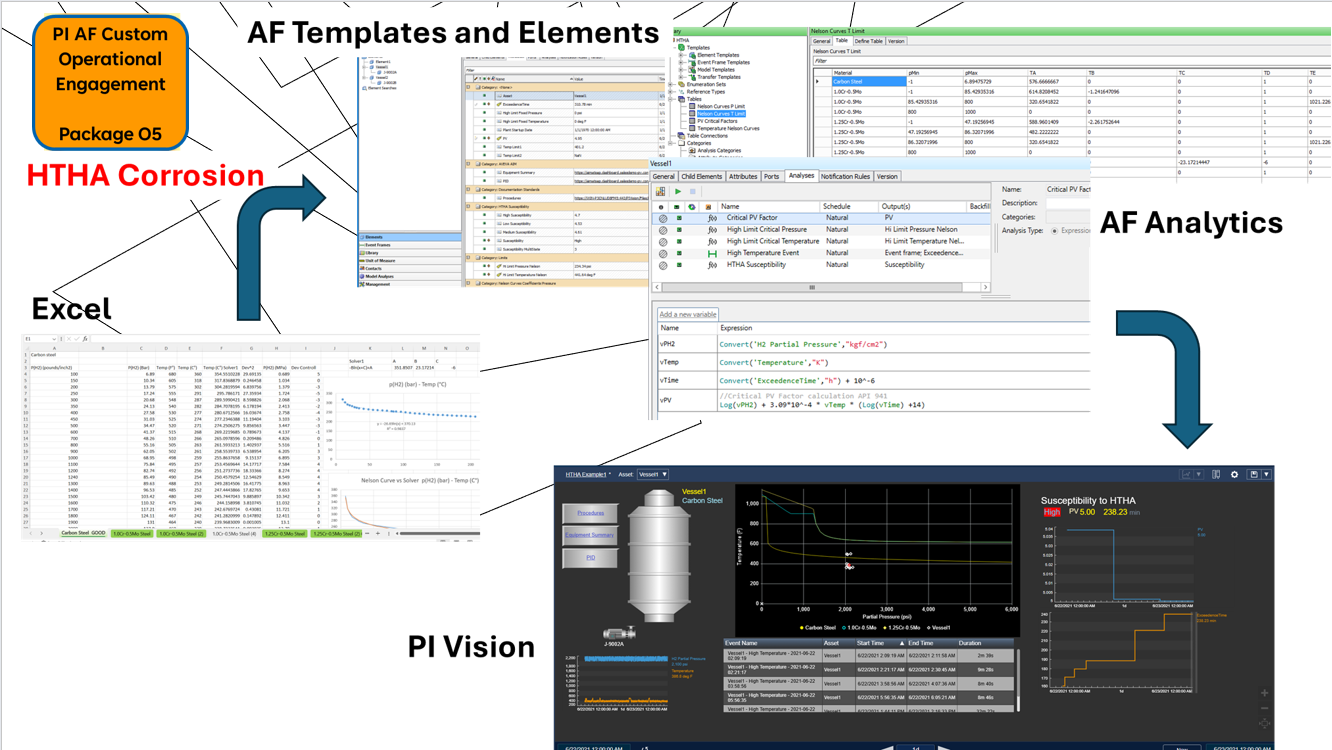
High-Temperature Hydrogen Attack risk per API 941 Nelson Curves. AF templates encode material-specific susceptibility (Carbon Steel, 1.0Cr-0.5Mo, 1.25Cr-0.5Mo); real-time pressure-temperature exposure tracked against critical limits.
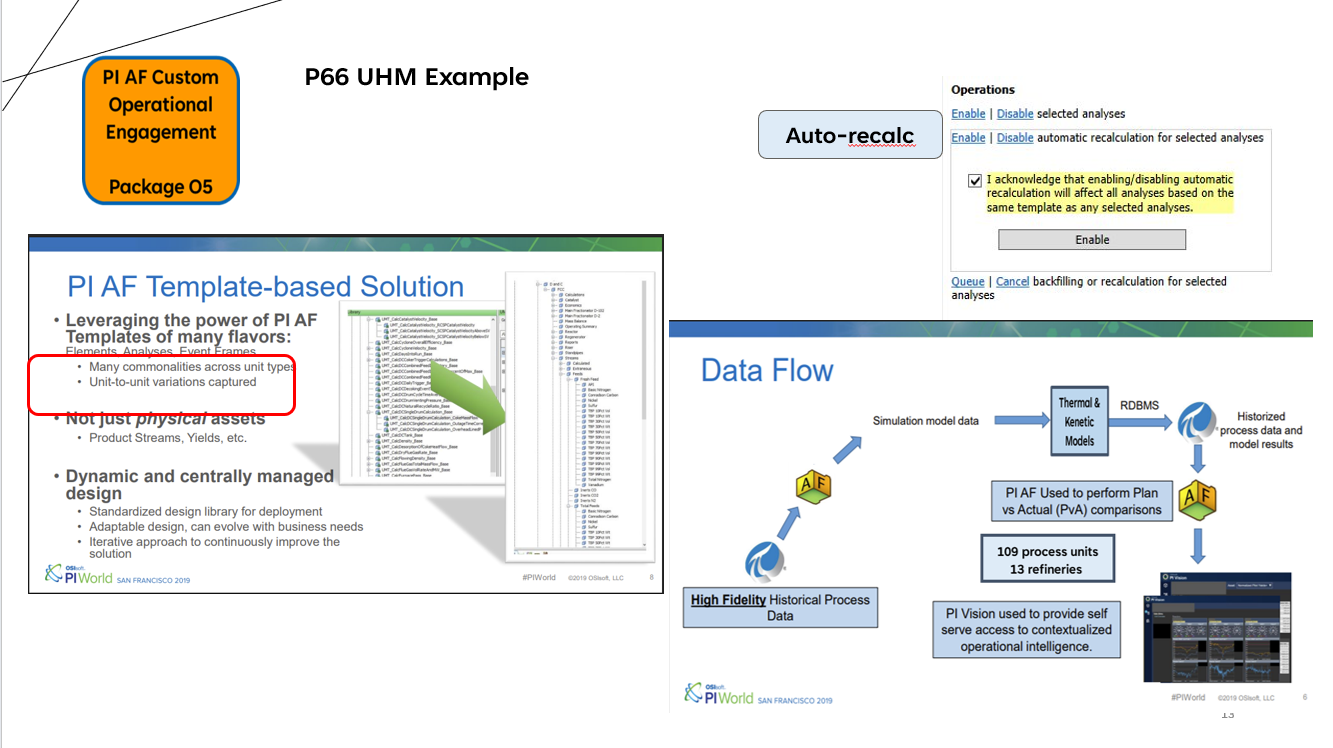
Enterprise-scale Unit Health Monitoring with Plan-vs-Actual comparisons. AF templates cover physical assets and product streams, yields, calculations. Standardized library deployed across 109 units, 13 refineries with self-serve PI Vision.
PI AF is the digital model of every LNG asset — rolling up calculations, alerts, and dashboards consistently from equipment to train to plant. Replaces fragile spreadsheets with live PI Vision and Seeq.
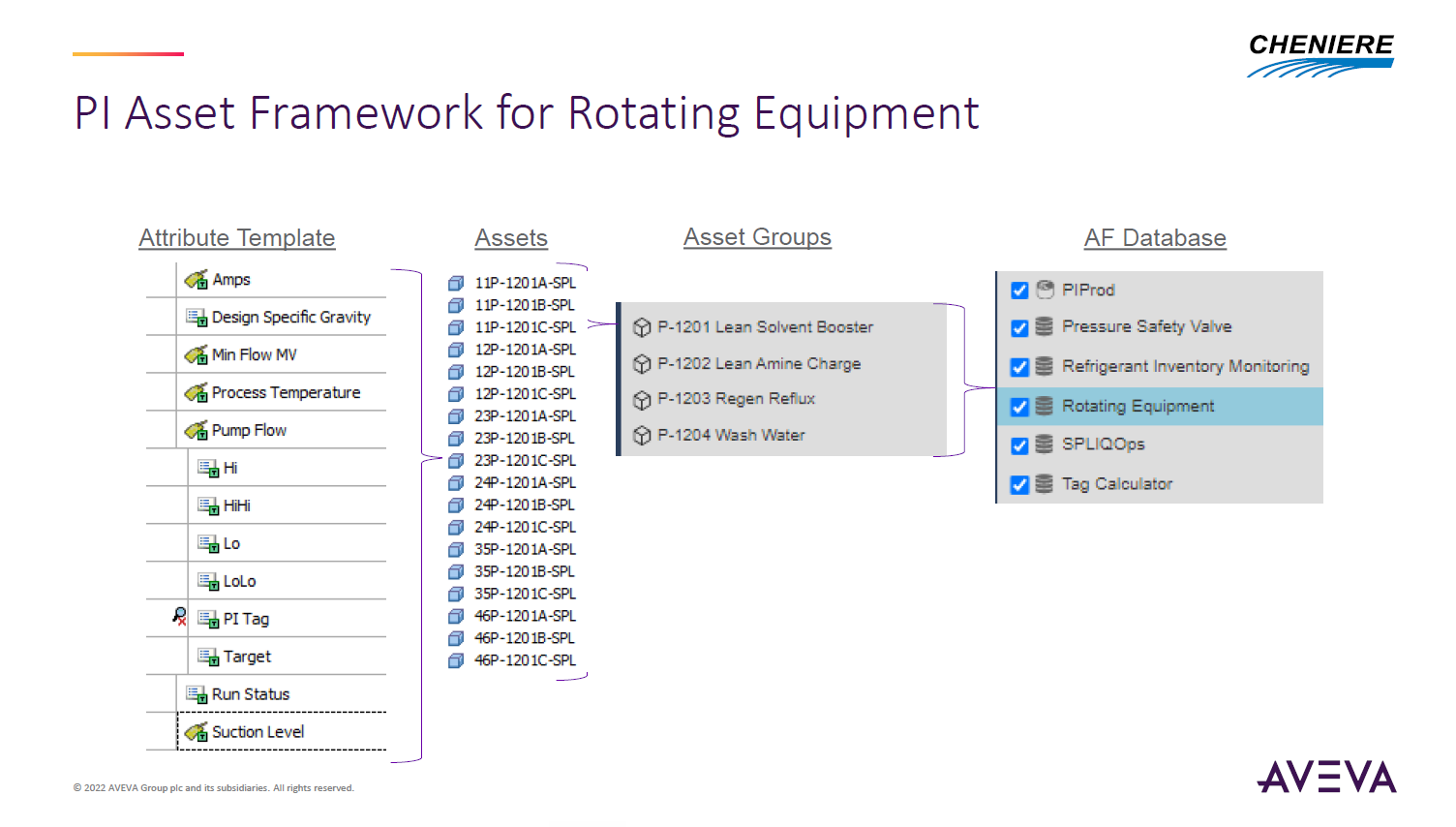
Asset Performance Monitoring for LNG plant rotating equipment — compressors, pumps, and fin fans. Vibration, bearing temperatures, seal condition, and BEP deviation calculated from flow / head / power. Catches degradation before it costs MTPA.
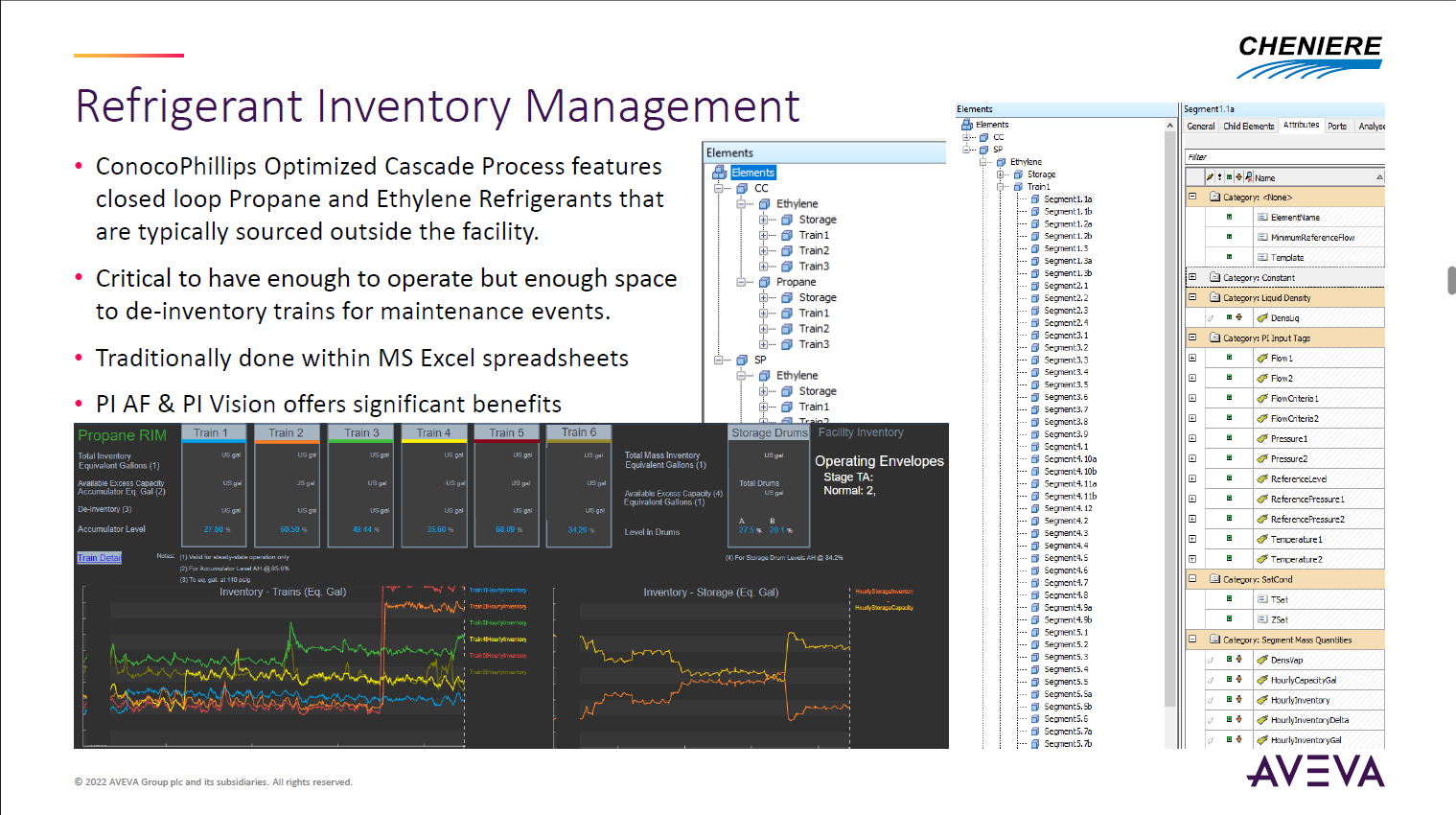
AF analytics that manage and project LNG refrigerant inventory — propane, ethylene, and mixed refrigerant. Real-time levels plus forward projection so operations can plan de-inventory windows, refills, and turnaround logistics with confidence.
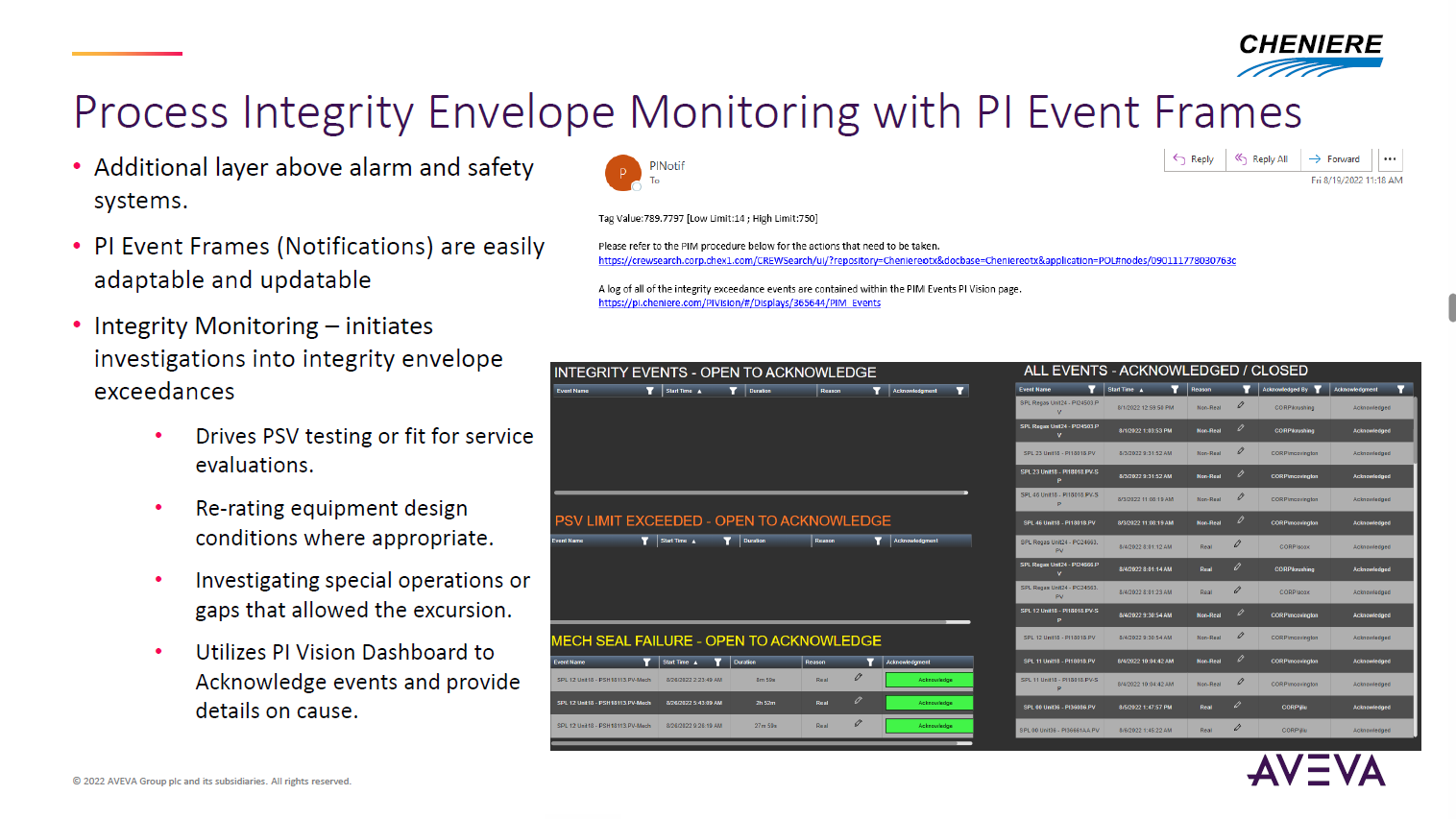
AF templates encoding Integrity Operating Windows for critical LNG process variables — temperatures, pressures, flows, compositions. Continuous comparison against safe, optimal, and integrity limits triggers proactive operator action before excursions become incidents.
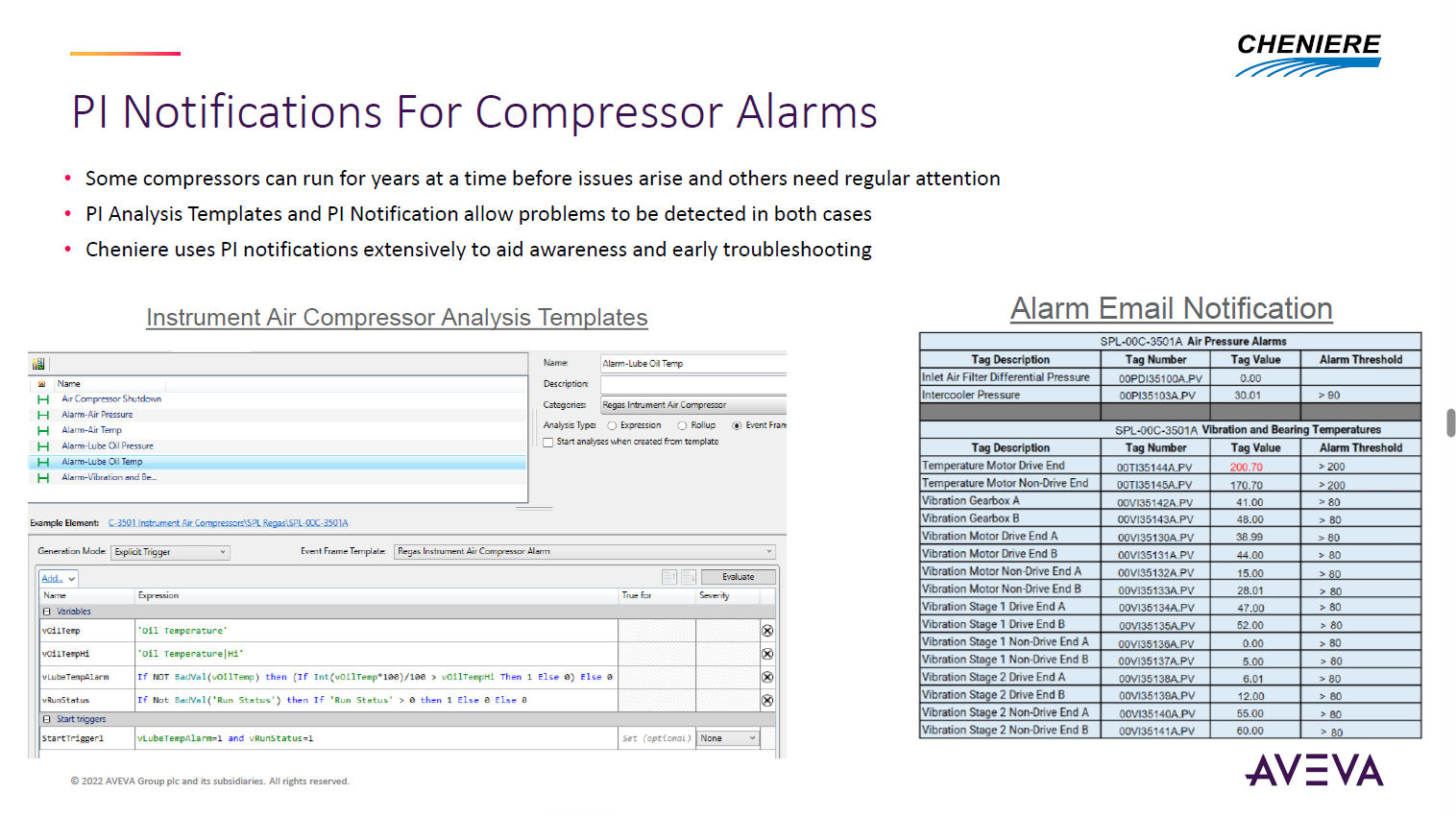
AF analytics that identify and notify on compressor alarms — surge, vibration, bearing, seal — across the train. Prioritized notifications surface what matters; nuisance alarms get filtered. Cuts alarm fatigue and protects the most expensive equipment in the plant.
From bulk industrial chemicals to specialty formulations to petrochemical feedstocks, AF brings process, quality, and reliability data into one continuous operational model — protecting margin around the clock.
Continuous-process plants producing commodity intermediates — ammonia, methanol, chlor-alkali, sulfuric acid, hydrogen peroxide, ethylene oxide, industrial gases. The levers are well known: yield, energy, quality, and uptime. AF makes them measurable.
Coatings, adhesives, agrochemicals, electronic chemicals, fragrances, additives — specialty chemistry runs on batches, recipes, and campaigns. AF turns recipe and quality data into auditable, repeatable performance.
From ethylene crackers to polymer reactors and intermediate plants, AF turns process and quality data into closed-loop surveillance — protecting yield, quality, and margin around the clock.
From pit to product, metals and mining operations live and die by throughput, yield, energy per ton, and equipment availability. AF gives each site — and the enterprise — one operational model.
Whether it's an integrated steel mill, an aluminum smelter, or a copper refinery, the levers are the same: heat balance, throughput, quality, and equipment availability. AF makes those levers measurable and actionable.
Mining operations span fleet, crushing, milling, flotation, concentration, and tailings. AF unifies them into one model the GM, the metallurgist, and the maintenance planner can all use.
The transition portfolio is exploding in complexity — hydrogen, wind, solar, storage, capture. All of it shares one need: a trustworthy, contextualized data backbone. AF turns that into one operating model across asset classes.
Hydrogen production — green (electrolysis), blue (SMR + CCUS), or grey — is one of the most data-intensive transition asset classes. Stack health, balance-of-plant integration, and compression efficiency all need contextualized surveillance.
Onshore and offshore wind farms generate enormous volumes of SCADA data. AF turns it into actionable surveillance — turbine, string, and farm — so capacity factor and availability become controllable, not just reported.
Solar PV, battery energy storage (BESS), carbon capture & sequestration (CCUS), geothermal, and biofuels each share one need: trustworthy operational data, contextualized into an actionable model that scales across the fleet.
Environmental compliance applies to every industry on this page. PI Asset Framework lets you treat molecules as assets — calculating, aggregating, and reporting emissions, water, and effluent KPIs in real time, from individual combustion source up through unit, plant, site, and enterprise. Proactive, real-time, audit-ready.
This engagement turns PI AF into a real-time emissions calculation engine. Live data from flow meters, gas analyzers, and composition data flows into AF formulas that compute CO2, CH4, and N2O at the molecular level using actual process streams (flare gas, compressor vents, amine regeneration) — not static emission factors. Calculations roll up: source → equipment → unit → plant → site → enterprise.
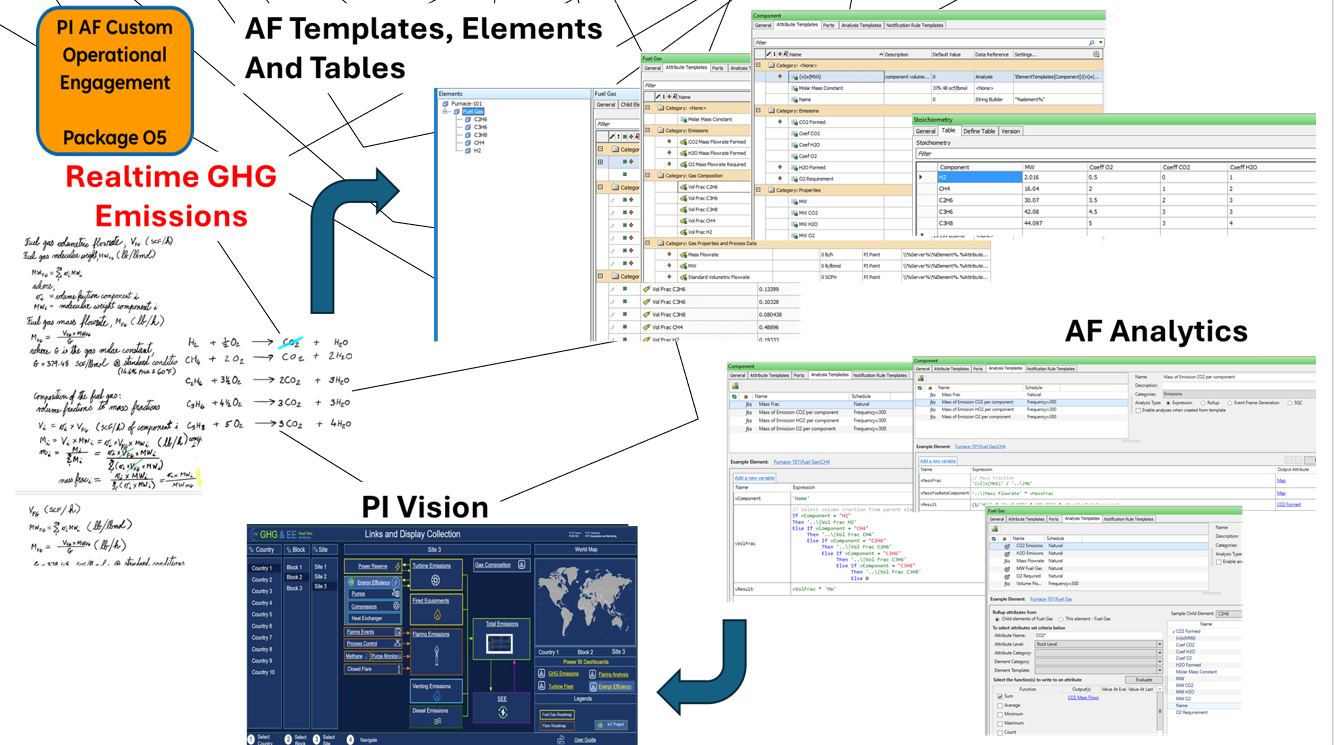
End-to-end custom engagement: fuel-gas element templates, combustion source templates, AF Analytics for CO2/CH4/N2O calculation, PI Vision country/site/source displays, and Power BI roll-ups for ESG and regulatory reporting.